


Stories of His Glory Podcast
Welcome to Stories of His Glory—a powerful podcast that highlights how Jesus Christ is transforming lives through sports. Each episode features coaches, athletes, FCA staff, and others connected to the ministry of FCA as they share stories of faith, perseverance, and impact. Whether you're on the field, in the locker room, or supporting from the sidelines, Stories of His Glory will equip you in your journey of faith and empower you to do what God called you to do.
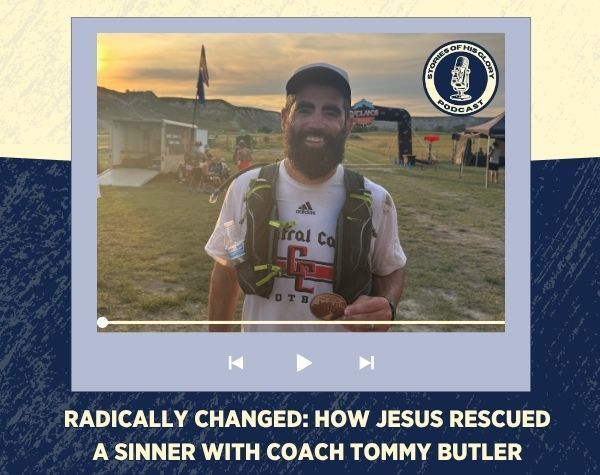
Tommy Butler has been 0-9 and one yard short of a state championship. Neither mattered as much as he expected. In this episode of the Stories of His Glory podcast, the Central Cass coach shares how Jesus rebuilt a kid who once thought he was dumb. A Kid Who Shut Down Tommy grew up poor in an affluent Oregon town. When a classmate discovered he couldn't spell the word "the," the room laughed—and Tommy decided he'd never speak again. His GPA fell below 1.0. Rather than ask for help, he learned to cheat, all the way through college. Sports were the one place he was good, so his identity lived there. His future wife was the first person to see through the act and help him catch up. He fell in love with learning, and the kid who couldn't spell became a teacher. Seeds, a Surrender, and a Cancer Diagnosis Tommy didn't find Jesus because he was looking. A wrestling coach on fire for God broke his assumption that Christians were lame. A friend walked him through the Ten Commandments and showed him he was lost. At an altar call he stood to go forward and couldn't move; something pushed him forward. This year his wife faced breast cancer. He asked his best friend, What am I going to do if she dies? The answer came back tenfold, almost audible: You've never raised those babies on your own, and you never will. At Central Cass, he tells kids he loves them because he doesn't know if they hear it at home. Before home games he and his offensive coordinator run a chapel—four kids the first year, fifty-six last season. He preaches it as though they've never heard: Jesus died for the kid you are right now, not some future version of you. Rivals on Friday, Brothers the Rest of the Week Tommy and Kindred's coach, Nate Safe, are one and two in the region every year. He'll tell you straight: he wants to go 12-0 every season, and he'd love to hand Kindred a loss. His daughters give the rivalry two thumbs down. But he also knows the rivalry makes both programs better—two coaches pushing each other, both refusing to settle for second. When he coached Kindred's players in the Shrine game, he called Nate and admitted, I really wanted not to like your kids. They're awesome. He runs a great program, so of course they are. That's the balance. Tommy wants to win. But he says plainly: if he goes 12-0 and never tells those kids about Jesus, shame on him. A state title is awesome, but the next day is a regular day. What matters is what changed eternally. Conclusion Tommy spent years trying to be a quiet, mild Christian coach like someone else. A mentor asked him who gave him his passion, and whether God would want him to waste it. That unlocked him. He's fierce on purpose—God made him that way—and the work is managing the fire, not extinguishing it. If someone asks him why he's different, his answer is simple: somebody came into his life and radically changed it. Jesus wanted the drunk, the thief, the cheater, exactly as he was. And He doesn't call anyone to stay there. Call to Action Listen to Tommy Butler's full conversation on Stories of His Glory—on Apple Podcasts, Spotify, or our website. Visit fcand.org to get involved with FCA.
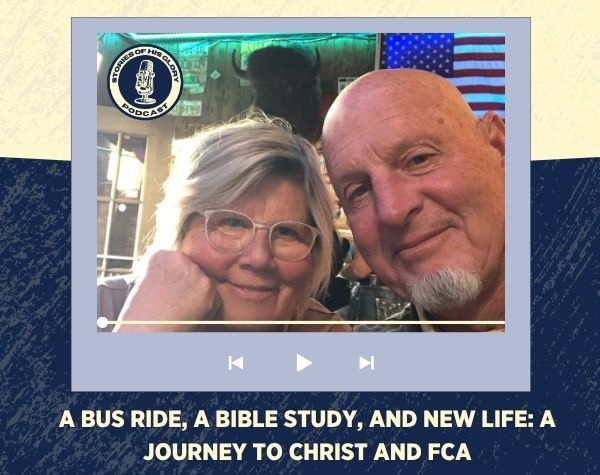
Ev spent nearly four decades in coaching (and Terri spent four decades as a coaches wife) before joining FCA staff at UND. Their story shows how differently God works in two people, and how long He is willing to wait. Two Roads to the Same Savior Terri grew up in a Christian home and walked forward at altar calls every summer, but never understood it was a relationship. She spent years trying to be good enough. That ended at a wellness convention in Texas, of all places. At an optional church service, Michael W. Smith sang a song tied to her family's history. She went to a prayer room, told God to prove He existed, and walked out changed. Ev felt God calling for years and ignored Him. He built his identity around toughness. He watched the change in Terri, and watched two believing coaches on his own staff. In 2004, on a school bus bound for a Bismarck playoff game, he finally surrendered. He was nearly 50. A Seed That Waited 28 Years In 1976, Ev was coaching in Philip, South Dakota, when a local FCA group shared the gospel with him at a pastor's ranch. He forgot about it. Twenty-eight years later, that seed came due. FCA was already woven into his life long before he ever joined staff. Ministry of Presence at UND Ev came on staff in 2013. When Bubba Schweigert returned as UND's head football coach, he opened doors. But the breakthrough was less dramatic: Ev simply showed up. He attended basketball practices for weeks before Coach Jones spoke to him. A player eventually brought him a chair. Presence comes before platform. Terri joined him in 2015 and started a Bible study for the basketball team. God answered her fear of not knowing sports: They're just little girls in big girls' bodies who happen to play basketball. She knew how to love young women—she had raised four daughters. Their home became the hub. The ministry grew from seven athletes to around a hundred. Athletes baptized each other in bathtubs. At 20 below zero, they set up an ice-fishing tent and read the entire New Testament aloud, hoping someone would ask why. They took ten students to Guatemala. And they both learned something about athletes they'd gotten wrong—that sport consumes a college student's life, and everyone wants to see how you act when you lose. Conclusion Ev once said his whole idea of coaching flipped—from creating athletes and winning to building authentic relationships. It took decades to learn. He now watches athletes thank God on national television and thinks, I could do it again. The Nelsons prove that no faithful seed is wasted and no surrender comes too late. Call to Action Listen to Ev and Terri Nelson's full conversation on Stories of His Glory—on Apple Podcasts, Spotify, or our website. And if God has been calling you for years, stop waiting. Visit fcand.org to get involved with FCA.
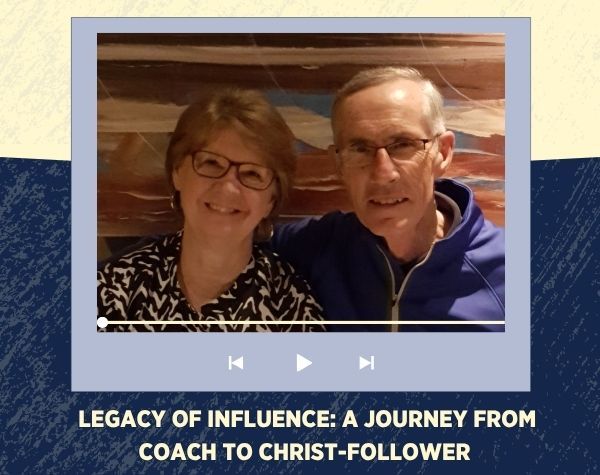
Most of us can point to one person who redirected our lives. For Rudy Stidl, that person wore a whistle. In this episode of the Stories of His Glory podcast, the retired Bismarck educator shares how one coach's example—and one friend's persistence—shaped decades of teaching, coaching, and faith. A Coach Worth Imitating Rudy grew up in Valley City, the son of two teachers. His parents' quiet faith formed him—his mom prayed every night, and his dad would pray aloud in the truck on the way to work, unashamed to be seen talking to God. But the man who shaped Rudy's calling was his social studies teacher and coach, Ratzlaff, who coached him in football, basketball, and track. Watching how that man invested in students, Rudy decided to do the same. He earned a degree in social studies and physical education, then coached and taught in Cavalier before a friend's phone call brought him to Bismarck High. The Invitation That Changed Everything When Rudy began teaching in Bismarck, a men's Bible study introduced him to FCA. There he met Walt Sherman, a small man with one arm, a recovering alcoholic who refused to let Rudy off the hook. Walt asked him to take students to an FCA summer conference in Fort Collins, Colorado. Rudy said he couldn't spare the income. Walt covered it himself. In 1970, Rudy loaded a stretch bus with kids and drove to camp. There he saw coaches walking with Bibles and a purpose he didn't yet have. At that camp, in the gym, Rudy asked Jesus to be his personal Savior—and started carrying his own Bible. He went back the next year. Then to camps at St. Olaf. Over the years, he took roughly 50 students, many of them drawn by friends who had already gone. He built an FCA huddle at Bismarck High and kept pouring into coaches and athletes for the next three decades. Faithful in Every Season Rudy moved into administration, first as the assistant principal, then principal at Hughes, then opening Horizon. He prayed his way through the challenges of leading strong-willed teachers. Years later, reviewing résumés, he spotted an applicant who listed FCA involvement, a heavyweight wrestler from Northern State. Rudy brought him in. That hire became a fellow huddle leader and Bible study partner—a full-circle moment of the same investment that had reached Rudy decades before. His anchor verses reflect the life he has lived: Philippians 4, rejoicing always and letting gentleness be evident to all; Romans 12, clinging to what is good and overcoming evil with good; and Psalm 118:24, "This is the day the Lord has made; let us rejoice and be glad in it." Those aren't slogans to Rudy. They're the reason his voice carries the same quiet confidence he saw in those coaches at camp. Conclusion None of the people who shaped Rudy knew the full effect. A coach modeled something real. Parents prayed quietly. A friend wouldn't take no for an answer. Decades later, Rudy was still planting into the next generation. That's how the kingdom grows, person to person, generation to generation. Call to Action Listen to the full conversation with Rudy Stidl on Stories of His Glory—on Apple Podcasts, Spotify, or our website. If you're a coach or educator, remember that the student watching you may be deciding who to become. Visit fcand.org to get involved with FCA.
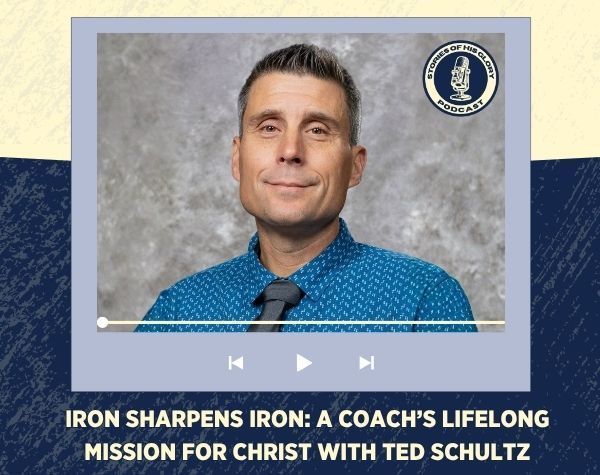
Most of us want to see results from our work. Ted Schultz waited years to see his. In the second episode of the Stories of His Glory podcast, the longtime coach and athletic director shares what happens when you stay faithful even when the harvest looks impossible. Three Years of "No" When Ted arrived at Cannon Falls High School as a young coach, he saw something in Nate Safe. Nate was a coach's dream—first in the weight room, a leader in the hallways. For three years, Ted invited him to FCA meetings, Bible studies, and Super Bowl parties. Nate never came to one. Yet he walked away from that school respecting Ted more than any man alive. Even when he told himself faith wasn't for him, he never forgot the coach whose life had a joy he didn't have. Years later, the phone rang. Nate had given his life to Christ, left the insurance industry, and joined FCA. He called Ted to say thank you. You plant and water; God gives the growth on His schedule. From Head Knowledge to Heart Faith Ted knows the gap between knowing about God and actually knowing Him. He grew up doing all the right things, but his faith became personal his sophomore year at Augsburg College. He finally understood that Christ died for his sins, that he needed to repent, and that salvation comes by confessing with the mouth and believing in the heart. He points to the children's book You Are Special to explain his outlook: the dots others stick on us only hold if we care more about what the world thinks than what our Maker thinks. That conviction shaped how he coached, how he treated his players, and even how he handled losing. The John 10:10 Life Ted's counsel to any coach who loves Jesus comes down to three steps: get in the Word, find fellowship with other believers, then make an impact. He warns against the counterfeit doctrine of "be the best version of yourself." The best version of Ted Schultz, he says, isn't Ted Schultz at all—it's a man on his knees before the Lord. The thief comes to steal and destroy, but Jesus came that we might have life to the full. Coaches must stay alert to what the culture teaches, because the enemy's aim is to cut off relationship with Jesus. Conclusion Ted never expected to see the fruit of those years of rejection, but God had been working the whole time. That is the promise for anyone who invests in others: your labor is not in vain. Keep planting. You never know when the phone will ring. Call to Action Listen to Episode 2 of Stories of His Glory on Apple Podcasts, Spotify, or our website. If you are a coach or mentor, start a huddle, invest in one student, and trust God with the harvest. Visit fcand.org to get involved with FCA.
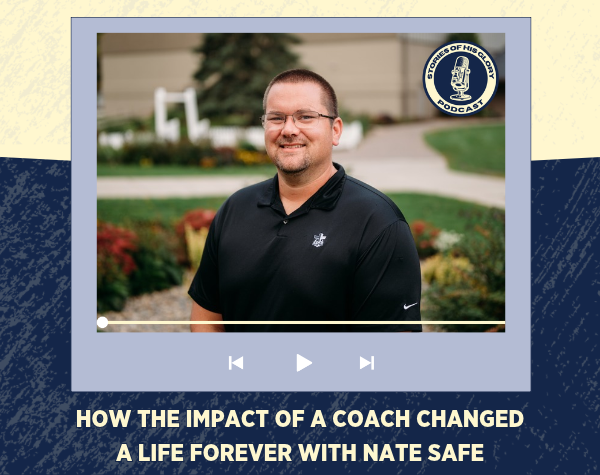
In a culture that is constantly asking, "What do you do?" it can become easy for our answer to that question to become our entire identity. But what happens when that identity is no longer who we are? That was the wrestle that Nate Safe had after his football career at NDSU ended. His identity, which was fully wrapped up in the answer "college football player" was no longer true. In the first episode of the Stories of His Glory podcast, North Dakota FCA State Director Nate Safe shares how God rebuilt his life after the idol of football no longer satisfied. When the Idols Fail Growing up, Nate’s identity was wrapped up in football. As an offensive lineman for the NDSU Bison, he did all that he could to excel on the field. But when his playing days ended, Nate struggled. He was a year out of college, married, and failing at his first real job. Nate faced the hard truth, his identity was wrapped up in football, but that identity was no longer who he was. When the cheering stopped and his career ended, Nate had to figure out who he was when he wasn't an athlete. From Head Knowledge to Heart Faith During that season of life, Nate’s kept thinking about his high school coach, Ted Schultz. Coach Schultz was a star tight end at Augsburg College in Minneapolis and had come to faith through FCA while there. As a young high school football coach, Ted lived out his faith. He treated his wife well, he cared for his players, and his life had a joy Nate recognized he didn't have. Nate grew up in church and knew Bible stories and the right answers. But he quickly learned that head knowledge is not the same as saving faith. It wasn’t until his football idols shattered that the gospel finally clicked. He stopped seeing Jesus as just a moral teacher and started understanding the life-changing grace of the cross. Today, Nate’s identity is no longer tied to his place on the depth chart, but is rooted in the grace and mercy of Jesus Christ. His top three roles are: a follower of Jesus Christ, a husband to his wife Alice, and a father to his three boys. Everything else flows from that foundation. Concluding Challenge Nate’s journey from a former college football player to a ministry leader proves that God redeems our failures. He takes the things we thought were wasted and uses them for His glory. We all face the temptation to build our identity on things that will eventually fade, whether it is our careers, our achievements, or the approval of others. But those things will always leave us empty. Only Christ provides a foundation that lasts. Before we can point others to Jesus, we must let Him reorient our own hearts. Listen to Episode 1 of Stories of His Glory on Apple Podcasts, Spotify, or our website to hear all of Nate's story. If you are in North Dakota and want to see every coach and athlete come into a growing relationship with Jesus, visit fcand.org to get involved with FCA today.
